
Valeria Chavez – Infoae
Wellness rhetoric sometimes masks a return to unhealthy body standards, according to experts. How to promote a healthy relationship with food and the body from childhood.
There was a time when beauty stereotypes stopped presenting thin bodies as hegemonic and gave rise to what we know as the acceptance of "real bodies".
“You don’t judge other people’s bodies,” adults were supposed to learn, and that’s how new generations began to be raised. However, under the guise of healthy lifestyles, the cult of physical exercise, and the pursuit of well-being, specialists warn that new forms of body obsession are lurking today.
The phenomenon, which permeates social media, the fashion industry, and the medicalization of obesity, is causing concern in consulting rooms, where specialists are increasingly reporting how the discourse has changed from "I want to be thin" to "I want to reduce inflammation," "optimize my metabolism," or "eat clean.".
A return to the cult of thinness disguised as health?
According to pediatrician Marisa Armeno (MN 108.583), a specialist in child and adolescent nutrition and member of the Argentine Society of Nutrition (SAN), “today extreme thinness is no longer presented as an explicit aesthetic ideal, but as a supposed health objective.”.
When consulted by Infobae, the specialist described what she observes in her daily practice: “Unnecessary restrictions on food groups, an irrational fear of carbohydrates, prolonged fasting without medical advice, or ever-growing lists of 'forbidden foods'.‘ According to her, all of this ’is legitimized with pseudo-scientific language. The problem isn't the pursuit of health itself, but when that pursuit becomes rigid, obsessive, and disconnected from the evidence.”.
From the perspective of psychiatrist and member of the Academy of Eating Disorders, Juana Poulisis (MN 97.898), “there is a reconfiguration of the cult of thinness, and it is presented under the guise of well-being and a healthy lifestyle.” Poulisis noted that in clinical practice, “everything is hyper-focused on body composition: whether there is a sufficient percentage of fat, muscle mass, and very rigid behaviors, such as eliminating food groups like carbohydrates. Extremely thin, but fit, bodies are idealized.”.
For her part, pediatrician and nutrition specialist Irina Kovalskys (MN 80.503), a member of the SAN and medical director of the Institute of Child and Adolescent Nutrition and Metabolism, stated that "the cult of thinness has persisted, especially in areas such as fashion, advertising and certain social environments," although she acknowledged that there is also greater awareness of body diversity and the recognition of eating disorders.
Behaviors and warning signs: where is the limit?
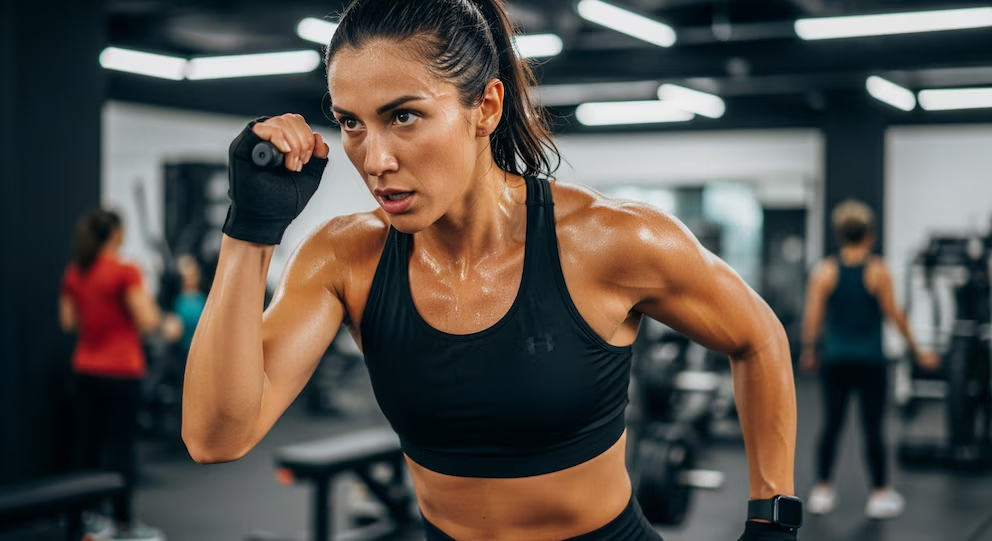
The rise of the fitness lifestyle can serve as a socially validated mask for eating disorders. Armeno warned: “The fitness lifestyle can be a perfect mask for an eating disorder because it’s socially validated. No one questions someone who works out every day, weighs their food, or avoids certain foods, even when those behaviors are extreme.” The specialist clarifies: “Eating healthy is not the same as being afraid to eat. Working out is not the same as feeling guilty if you don’t.”.
Kovalskys pointed out that “obsessions can manifest in many ways, but in the case of food, there is a clear line between self-care behaviors and rigid, extreme patterns.” She elaborated: “This ceases to be healthy when behaviors such as systematically avoiding social situations due to an inability to control eating, feeling intense guilt for not adhering to the plan, or dedicating an excessive amount of time and thought to food and exercise appear.”.
Poulisis agreed with them, stating that "the fitness lifestyle is totally validated and not criticized, but the limit lies in the degree of rigidity, how much anguish, how much dissatisfaction there is, how much time this type of healthy life takes the person, how much it impacts their social and emotional life.".
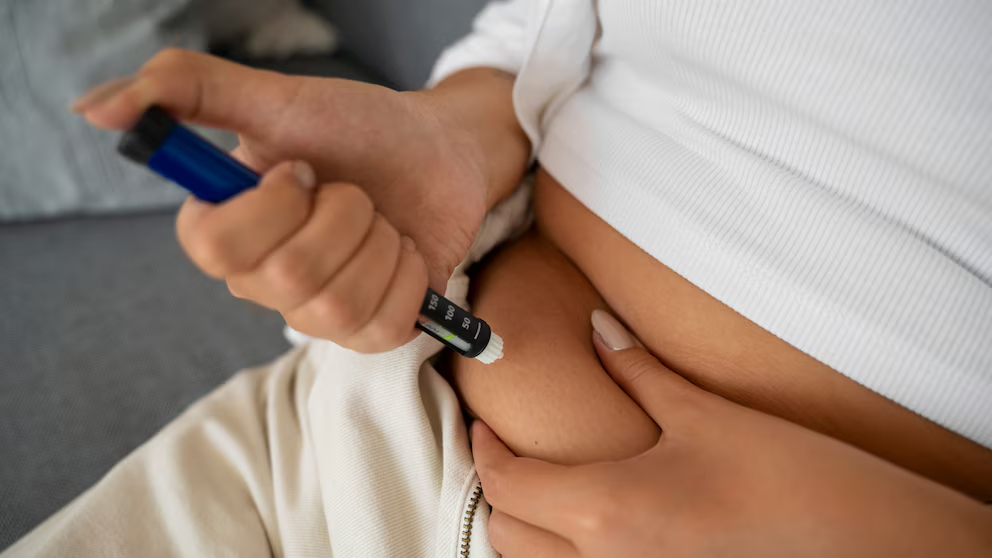
The use of drugs to treat obesity is generating debate due to their off-label use within the context of these new ideals. Poulisis emphasized that these medications "have a perfectly legitimate role in the treatment of obesity, which is a metabolic disease, and the truth is that they are wonderful for this when properly indicated." However, he warned about off-label use: "The problem is when patients go directly and buy them because a prescription isn't required, or when they are injected at a cosmetic clinic. Their use has become completely trivialized.".
Armeno added that “drugs are not the problem in themselves. When properly prescribed, they are a valuable therapeutic tool for a chronic disease like obesity. The problem is their off-label use and the message surrounding it. Today they are used as a cosmetic shortcut, not as a medical treatment. And that reinforces the idea that the body can be quickly modified, pharmacologically, to meet a certain standard.”.
Along the same lines, Kovalskys clarified that “the problem is not scientific advancement, but its inappropriate use. Patients who use these medications without a clinical indication could not only appear thinner, but also become malnourished, lose lean mass, and experience unnecessary health complications.”.
Social media and digital culture as amplifiers of the body ideal
Social media and the fashion industry amplify and rapidly disseminate these body ideals. According to Kovalskys, “social media can be especially harmful during adolescence, a highly vulnerable stage, due to exposure to unrealistic beauty ideals that impact self-esteem.” Armeno added that “algorithms tend to reinforce extreme content, not nuance. Restrictive diets, very thin bodies, intense routines; that gets more visibility than a balanced approach, which is what we specialists advocate in our practice.”.
Poulisis defined social media as “an echo chamber that constantly amplifies the ideal body image. It's constantly making us feel like our self-esteem is terrible, constantly generating comparisons.” Although she acknowledged that the fashion industry is showing some progress in size range, she considered that “we haven't yet achieved what we see, for example, in the United States, where there is truly a wide range of sizes.”.
Was there real progress towards body acceptance?
Regarding the acceptance of diverse bodies, Poulisis recalled that “there was indeed a great deal of visibility about it on social media, but it wasn't achieved. This concept was somehow reabsorbed by new ideals such as the fit body, being strong but thin.”.
“The reality is that the scope of body diversity has ceased to be visible, I would say especially this year,” the psychiatrist reinforced.
Armeno agreed and pointed out that “there was a moment—mainly driven by movements like 'body positivity'—where body representation expanded. But I think it was more discursive than structural. What we are seeing now is a reaction, a digital culture that is once again rewarding extremely thin bodies, but now with a narrative of 'well-being'.‘.
Kovalskys added that “knowledge about the impact of extreme thinness on health has increased in recent years, as have initiatives to reduce body stigma. These transformations are not linear and coexist with reappearing trends.”.
Keys to promoting a healthy relationship with food and the body in children and adolescents
The role of adults is fundamental in preventing and addressing eating disorders in childhood and adolescence. Kovalskys pointed out that “a healthy relationship with food is built gradually, with adults as role models and organizers of the food environment.” She maintained that “factors such as a healthy weight, respectful environments, and enjoying one's body for its function act as protective factors.”.
Armeno emphasized that “children learn from what they see, not from what we tell them. Comments about body image, diets at home, classifying foods as 'good' or 'bad'—all of that has an impact. Children aren't born with prejudices about food: they learn them.‘ Among the key elements she mentioned (for promoting a healthy relationship with food and the body from childhood) are ’offering structured but flexible meals, avoiding focusing the conversation on weight or appearance, and encouraging internal awareness of hunger, satiety, and enjoyment.‘.
In turn, Poulisis recommended that “you don’t talk about other people’s bodies, don’t talk about other people’s plates,” since all these comments “are predisposing factors for an eating disorder.” The psychiatrist emphasized the importance of “helping children understand the signs of hunger and satiety, encouraging them to exercise as something enjoyable and not as an obligation, and being very attentive to red flags when rigid, restrictive, or extremely anxious behaviors toward food begin to appear.”.
In closing, the specialists agreed that critical education and psychoeducation are key tools to counteract the influence of networks and media, and to build a sustainable and respectful relationship with food and the body from childhood.
Fountain: Chavez, V. (2026, April 13). The obsession with thinness takes on new forms: "Eating disorders can be hidden within fitness culture"«. Infobae.